
Connection of Slip Lock Fittings and Plastic Tubes
To address issues customers encounter during the installation of plastic tubes and slip lock fittings, we outline here how to connect slip lock fittings and plastic tubes, specifically the double-seal fittings manufactured by Relab. For misting systems using stainless steel tubing, connecting lines and fittings is relatively straightforward. However, problems may arise during the connection of misting systems employing plastic tubes.
Slip Lock One-nozzle Connector
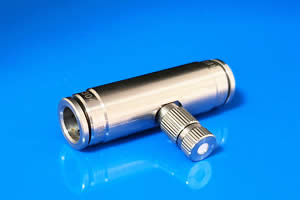
There is one nozzle threaded hole for the 700 single-jet fitting. It allows users to choose from a variety of threaded nozzles to match their system or replace the original mist nozzles. It is made from a food-grade 304 stainless steel, which is the best choice for the food processing industry. ...
Read MoreSlip Lock Tee
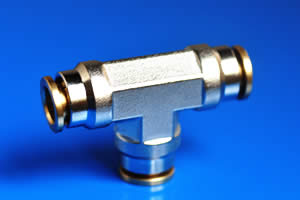
Model 703 is a three-way tee coupling. The one-piece body is forged by mold. It is made from a food-grade 304 stainless steel, which is the best choice for the food processing industry. Compared with those split and bonded products, our push lock tee is thicker and cost-free in terms of material selection. It does not need special hoisting, only need to fix the pipeline horizontally, which can help users save 50% installation time. ...
Read MorePA Nylon Coil Tube
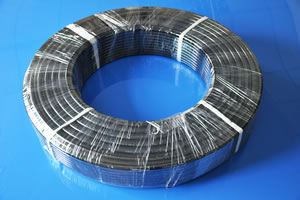
This is a black nylon coil made of PA6 raw material, which is widely used in high-pressure spray systems. It has excellent mechanical strength and abrasion resistance, as well as good chemical resistance and electrical insulation, making it ideal for high-pressure misting systems. ...
Read MoreHigh Pressure HDPE Pipe
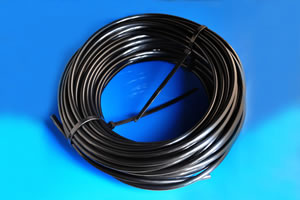
Our misting system PE pipes are manufactured from premium high-density polyethylene (HDPE) using single-screw extrusion with precision molds. The HDPE pipes feature excellent fluid transfer capabilities for industrial applications, high-pressure water systems, and agricultural irrigation, with minimal water absorption making them ideal for humid environments. ...
Read More
Plastic tubes typically refer to high-pressure nylon tube (PA6 or PA12) and HDPE tube, capable of withstanding at least 50-70 bar water pressure. Due to factors like material selection, molds, manufacturing processes, and ambient temperatures during production, plastic tubes often exhibits significant dimensional tolerances. This creates challenges during the connection of slip lock fittings and plastic tubes.
For 3/8" (OD 9.52mm) plastic tubes, some outer diameters measure 9.6mm or even 9.7mm. Such dimensions struggle to pass through the internal O-ring of slip lock fittings, preventing full insertion and causing leaks.
So how should these tubes be installed?
- Before installation, use a cutting tool to remove any sharp burrs from the cut edge and chamfer the end at an angle no greater than 1mm. This prevents the sharp tube edge from damaging the internal O-ring of the fitting and allows the tube to insert smoothly without obstruction.
- If insertion remains difficult, wipe both ends of the pipe with a cloth dampened with vegetable oil. This will facilitate smooth insertion.
- After installation is complete, hold the tube and rotate it several times to ensure the locking ring engages securely on the tube.
- If leakage persists after applying the above methods, use a tool to remove the retaining ring at the front of the fitting. Inspect the internal O-ring for damage.
Custom Plastic Mist Tubing
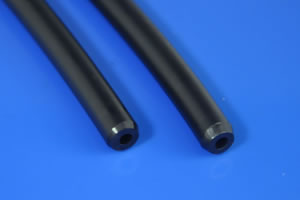
This is a fixed-length nylon or HDPE plastic tubing. The length can be cut into different sizes according to customer requirements. The inlet of each section of the tube is beveled with a special chamfering knife to remove burrs. All you need to do is insert the custom tubing into the 600 Series compression fittings and 700 Series slip lock fittings and there will be no obstruction. ...
Read More
Finally, we offer these recommendations:
- Order slip lock fittings and tubes from the same supplier whenever possible to ensure compatibility. Relab tests all fittings using its own tubes during production.
- Avoid low-quality plastic tubes. These inexpensive options often have significant outer diameter tolerances, leading to installation issues.
- Opt for stainless steel tubing whenever possible. While stainless steel tubing carries a higher upfront cost, it offers significant advantages in installation and maintenance, resulting in comparable overall costs. For example, plastic tubes and slip lock fittings become difficult to reuse after several years. Plastic tubing absorbs moisture during use, causing expansion that increases its outer diameter. This expansion makes it impossible to remove from fittings, and the enlarged tubing cannot be reused. In contrast, stainless steel tubing remains unchanged even after 10 years of use.
If you want to learn our mist nozzles and fittings, please contact us to get a latest quotes.