
Selection of Piping Materials for Transporting Disinfectant
Misting systems are commonly used to spray various disinfectants, especially during the three years when COVID-19 outbreaks were frequent, making spray disinfection a routine practice. The most widely used disinfectants are hydrogen peroxide and 84 Disinfectant, which effectively kill bacteria and disinfect surfaces. They are extensively applied in medical settings, daily cleaning, and industrial applications.
Hydrogen peroxide solution
Hydrogen peroxide solution (hydrogen peroxide) is a colorless, transparent liquid with a slightly pungent odor. Its core function lies in its strong oxidizing properties, enabling effective sterilization and disinfection. Consequently, it sees extensive use in medical settings, daily cleaning, and industrial applications.
Sodium hypochlorite solution
Sodium hypochlorite solution (84 Disinfectant) is a highly effective chlorine-based disinfectant primarily composed of sodium hypochlorite. It rapidly kills bacteria, viruses, and fungi, making it widely used for surface and environmental disinfection in homes, hospitals, and other settings.
So, which tubing material is better suited for conveying the two solutions in a misting system? Below we compare three commonly used options: nylon tubing, HDPE tubing, and stainless steel tubing.
Misting system tubes:
PA Nylon Coil Tube
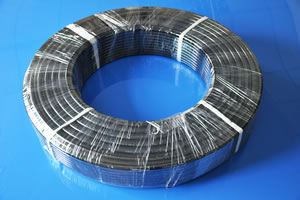
This is a black nylon coil made of PA6 raw material, which is widely used in high-pressure spray systems. It has excellent mechanical strength and abrasion resistance, as well as good chemical resistance and electrical insulation, making it ideal for high-pressure misting systems. ...
Read MoreHigh Pressure HDPE Pipe
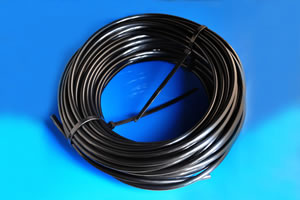
Our misting system PE pipes are manufactured from premium high-density polyethylene (HDPE) using single-screw extrusion with precision molds. The HDPE pipes feature excellent fluid transfer capabilities for industrial applications, high-pressure water systems, and agricultural irrigation, with minimal water absorption making them ideal for humid environments. ...
Read More304 Stainless Steel Pipe with Grooves
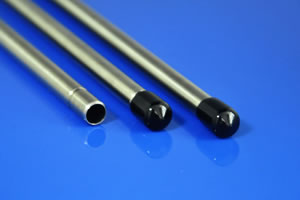
This precision 304 stainless steel pipe has a prefabricated groove at both ends, which perfectly matches Relab's 700 series slip lock fittings. The inlet of pipes is machined by CNC lathes, which allows the pipe to pass through the sealing ring in the fitting without hindrance. Its surface is finely ground and the outer diameter is guaranteed to a tolerance of +/-0.03 mm, which ensures that the pipes and fittings are assembled without loosening and can resist the working pressure of 120 bar or greater. Its inner hole is magnetically cleaned, so that each pipe delivered is clean and dust-fre ...
Read More
RELAB offers nylon coil tubing, HDPE coil tubing, and 304 stainless steel tubing. Lengths can also be customized to meet specific requirements. Different tubing materials can be selected based on the application scenario.
- Nylon Tubing
- Corrosion Resistance: Nylon 11 (PA11) offers good corrosion resistance, but standard nylon tubing (e.g., PA6) may become unstable in hydrogen peroxide.
- Temperature resistance: Typically withstands -40°C to 120°C, but prolonged exposure to high-temperature disinfectants may accelerate aging
- Suitable applications: Recommended for low-concentration (below 3%) non-strongly oxidizing environments; material selection requires caution.
- HDPE Tubing (High-Density Polyethylene)
- Corrosion Resistance: PE tubing effectively resists strong acids and alkalis, including high-concentration hydrogen peroxide, with minimal corrosion.
- Temperature Resistance: Wide temperature tolerance (-30°C to 80°C).
- Service life: High-quality PE pipes can last over 50 years with low maintenance costs.
- Easy installation: Lightweight, flexible, and featuring stable welded connections, suitable for industrial applications.
- Stainless steel pipes
- Corrosion resistance: 304 stainless steel performs well in low-concentration hydrogen peroxide, but may accelerate decomposition in high concentrations or when impurities are present.
- Suitable Scenarios: Ideal for low-concentration, low-temperature environments. Note that metallic impurities (e.g., Fe²⁺) accelerate hydrogen peroxide decomposition.
In summary, HDPE pipes are more suitable for transporting hydrogen peroxide aqueous solutions, offering superior corrosion resistance, service life, and cost-effectiveness.
Note: High pressure plunger pumps are all made of stainless steel and brass, which are prone to chemical reactions with disinfectant, so it is not recommended to use. If you frequently spray disinfectant, please use pharmaceutical-grade diaphragm pumps and plastic tubing to assemble the atomization system.
If you want to learn more details, please contact us to get a latest quotes.